General Rules for All Drivers in Spain
Driving in Spain, whether as a resident or a visitor, is governed by strict regulations established by the Dirección General de Tráfico (DGT) and Spanish law. The foundational requirements cover two essential pillars: driver licensing and vehicle insurance. Understanding these general rules is crucial for anyone who gets behind the wheel to ensure legal compliance, road safety, and adequate financial protection.
Driver’s Licence: Proving Your Eligibility
The driving licence (permiso de conducir) is the primary document that certifies an individual is qualified and legally authorized to operate a specific type of vehicle.
- Mandatory Carry: All drivers must carry a valid and current driving licence whenever operating a vehicle. The DGT’s mobile application, miDGT, allows drivers with a Spanish licence to carry a digital version with the same legal validity as the physical card.
- Validity and Renewal: Spanish licences have mandatory validity periods (e.g., typically five to ten years for a standard B car licence) and must be renewed following a compulsory medical and psycho-physical aptitude test (Psicotécnico).
- The Points System: Spain operates a points-based licence system. New drivers start with 8 points and increase to 12 points after two years without infractions, and then to a maximum of 15 points over time. Points are deducted for traffic offenses, and losing all points results in licence withdrawal.
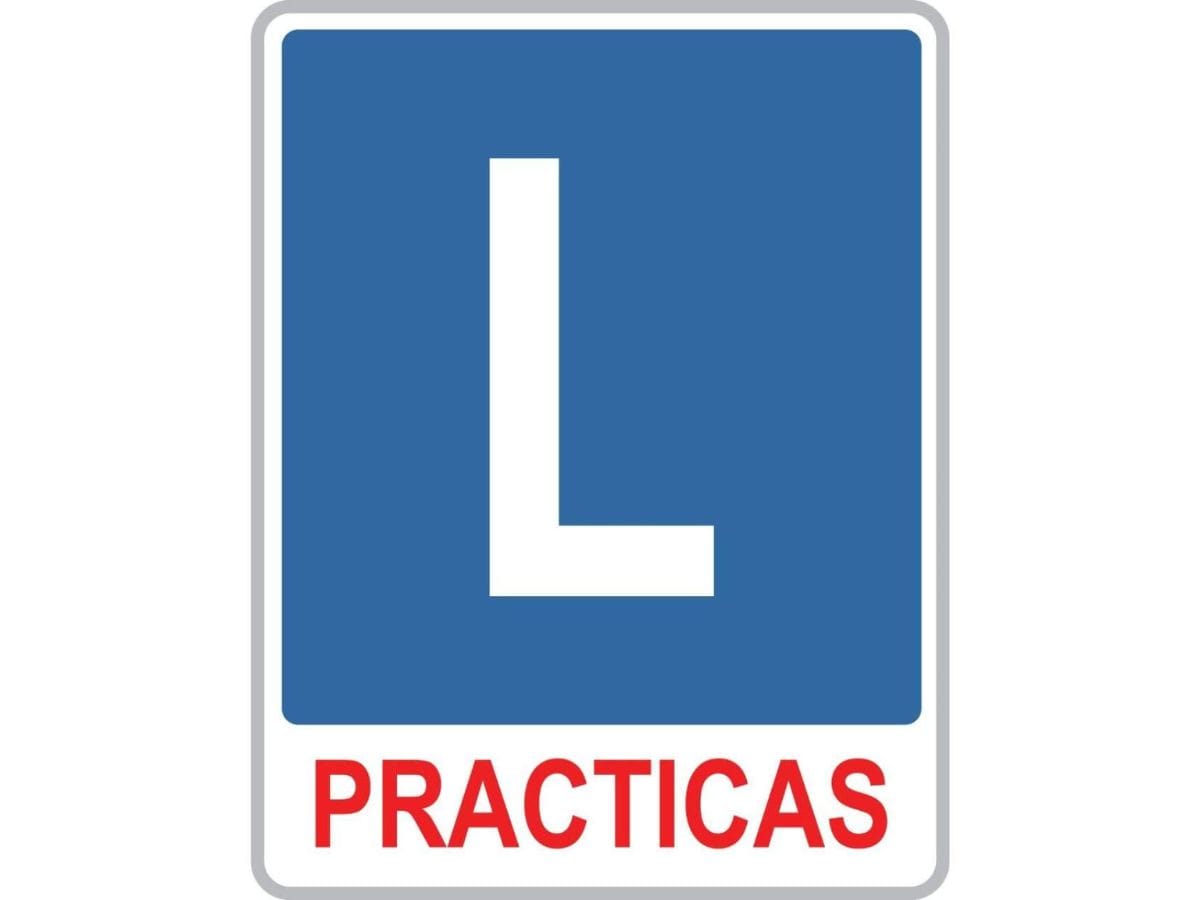
- Novice Drivers (Conductor Novel): New drivers (those with less than one year of experience) must display the green “L” sticker on the rear window of the vehicle to alert other road users. They also face stricter blood alcohol limits.
Vehicle Insurance: A Legal Obligation
In Spain, insurance is tied directly to the vehicle and is a fundamental legal requirement designed to protect third parties.
- Compulsory Third-Party Liability: By law, every vehicle with permanent residence or habitual parking in Spain must have valid Third-Party Liability Insurance (Seguro de Responsabilidad Civil Obligatoria or Seguro a Terceros). This minimum cover protects victims of an accident for damages (to property and people) caused by the insured vehicle, but it does not cover damages to the at-fault driver or their own vehicle.
- Proof of Insurance: While drivers are no longer legally required to carry the physical insurance policy or receipt, the vehicle must be insured. Authorities can instantly verify the policy’s validity via the Fichero Informativo de Vehículos Asegurados (FIVA) database. Failure to insure a vehicle can result in substantial fines and even immobilisation, regardless of whether the vehicle is being driven or merely parked.
- Named Drivers: Spanish policies traditionally focus on the vehicle, but it is critical to declare young or inexperienced drivers (often under 25 or with less than two years’ experience) on the policy. Failing to do so can result in the insurer reducing coverage or claiming back costs paid for an accident from the policyholder, even if the vehicle is covered.
These core rules ensure that all road users operate under the same framework of responsibility, competency, and financial protection while driving on Spanish roads.
Dirección General de Tráfico (DGT
The acronym DGT stands for Dirección General de Tráfico (General Directorate of Traffic), which is the Spanish government agency responsible for traffic control, road safety, and vehicle administration.
If you need to contact the DGT, here is the key information:
General Contact and Information
- General Information Phone:060
- This is the general information service for the Spanish government, which can handle many DGT queries.
- Cost: Calls to 060 have a fixed cost, typically the same as a one-minute national fixed or mobile call, regardless of the duration.
- From Abroad: Call +34 902 887 060.
- Central Office Phone: +34 913 018 316
Online Services and Appointments
- DGT Electronic Headquarters (Sede Electrónica): You can perform most procedures, such as paying fines, changing your address, or requesting vehicle reports, through their official electronic headquarters.
- “Cita Previa” (Appointment): You must request an appointment (Cita Previa) for most in-person procedures at a local Traffic Office (Jefatura u Oficina de Tráfico). You can do this:
- Online: Through the DGT’s Electronic Headquarters.
- By Phone: Call 060.
- miDGT App: The official mobile application (available for iOS and Android) allows you to carry your digital driving license, consult your points, and perform some administrative procedures.
Can I Drive in Spain with My Country’s License?
Driving licenses held by residents in Spain that were issued in non-EU countries with which an agreement exists can be exchanged for an equivalent Spanish license, provided a series of administrative requirements are met. You can check the list of countries that have bilateral exchange agreements with Spain. Furthermore, in this list you can check whether it is necessary to take additional aptitude tests to complete the exchange, the fee to be paid, and the date the agreement was signed.
To find out what you need and how to apply for the exchange, select the country of origin of the driving license in the search dropdown menu at the top of this page. If the country of origin of your license is not from the European Union, the European Economic Area (Iceland, Liechtenstein, and Norway) or Andorra, Switzerland, and Monaco, and it does not appear on the list of countries with an agreement, your license cannot be exchanged; you will have to obtain a new license.
Check the countries with which Spain has signed an agreement or for which a treaty exists for conducting a license exchange, and the required aptitude tests for carrying out the exchange.
Here is a detailed elaboration on the process of obtaining a Spanish driver’s license through exams.
🛣️ The Road to a Spanish License: Theory and Practical Exams
For most Americans, obtaining a Spanish driver’s license means starting from scratch. This involves passing both a theoretical (knowledge) and a practical (driving) exam, all in Spanish. It’s a demanding process that requires dedicated preparation.
Obtaining a Spanish Licence (The Process)
Since a direct exchange is not generally possible, you must complete the steps to obtain a new Spanish driver’s licence. This is usually done through an approved driving school (autoescuela).
| Step | Requirement/Action | Notes |
| 1. Residency Requirement | You must be a legal resident in Spain (have a TIE or residency certificate). | Some sources suggest you must have been a resident for at least six months before starting the process. |
| 2. Medical Fitness | Obtain a Psychophysical Aptitude Report (Certificado de Aptitud Psicofísica). | This is a required medical and reflex check from an authorised centre (Centro de Reconocimiento de Conductores). |
| 3. Theory Test | Pass the Spanish Theory Exam (Examen Teórico). | This is a multiple-choice test on Spanish traffic laws and signs. It is often conducted in Spanish, but you may be able to take it in English, depending on the region and the DGT office. |
| 4. Practical Test | Pass the Spanish Practical Driving Exam (Examen Práctico). | This test is conducted on the road with a DGT examiner and requires a driving school vehicle. It assesses your driving skills and adherence to Spanish traffic rules. |
| 5. Documentation & Submission | Apply to the DGT (Dirección General de Tráfico) with all required documents. | Documents include your TIE card, proof of address (Certificado de Empadronamiento), passport, medical report, completed application form, and proof of paid DGT fees. |
Step 1: Enroll in an Authorized Driving School (Autoescuela)
While not legally mandatory, enrolling in a autoescuela is highly recommended. They are an invaluable guide through the bureaucracy and preparation.
- What they provide: They handle your application to the traffic department (DGT), provide structured learning materials, grant you access to their platform for practice tests, and schedule your lessons and exam appointments.
- Cost: Enrollment packages typically range from €500 to €900, depending on the number of driving lessons you need.
Step 2: The Theoretical Exam (Examen Teórico)
This is a computer-based test on Spanish traffic laws, road signs, and safe driving practices.
- Format: 30 multiple-choice questions.
- Passing Grade: You can make no more than 3 errors.
- Key Challenge: The questions are often worded with subtle tricks and focus on very specific, sometimes obscure, legal points and exact numerical values (e.g., specific alcohol limits, tire tread depths, braking distances).
- How to Prepare:
- Use the Autoescuela Platform: The single most important tool. You must practice hundreds, if not thousands, of sample questions to understand the phrasing and question patterns.
- Focus on “Malos Usos”: These are common mistakes the test specifically targets. Your instructor will highlight them.
- Language: The exam can be taken in Spanish. If your Spanish isn’t fluent, you can request a translator for an additional fee, but this must be arranged well in advance.
Step 3: The Practical Exam (Examen Práctico)
This is the on-road driving test with a DGT examiner in the passenger seat. Your autoescuela instructor will often be in the back.
- Duration: Approximately 20-25 minutes.
- What is Tested:
- Vehicle Control: Smooth use of clutch, gears, steering, and signals.
- Observation (Mirror Use): This is critical. You must perform obvious, visible head checks of your mirrors and blind spots. Failure to do so is an instant fail.
- Urban & Interurban Driving: Navigating city traffic, roundabouts (glorietas), and faster roads.
- Specific Maneuvers: You will be asked to perform one or two maneuvers, such as:
- Parallel parking (aparcar en línea).
- Reverse parking into a bay (aparcar en oblicuo o en batería).
- Turning around in a narrow street (girar en un espacio limitado).
- Common Instant-Fail Mistakes:
- Exceeding the speed limit, even briefly.
- Failing to yield the right-of-way.
- Stopping on a crosswalk (paso de peatones).
- A single critical error in observation.
💡 Pro Tip: The “Circuito Cerrado”
Before hitting the open road, the test often begins in a closed course where the examiner will ask you to demonstrate basic vehicle handling, like moving in a straight line while looking backwards over your shoulder. This tests your fundamental control.
The entire process, from enrollment to passing both exams, can take several months. It requires a significant investment of time, money, and effort. The key to success is consistent practice with the test question database and embracing the specific driving style and safety obsessions that the DGT examiners expect to see.
The Dirección General de Tráfico (DGT) fees for obtaining a new driving licence in Spain, which is the process required for US citizens who are legal residents, are categorized under Tasa 2.1.
Official DGT Fees for Obtaining a New Licence
| DGT Fee Type | Description | Cost (2024/2025) | Notes |
| Tasa 2.1 | Obtención del Permiso de Conducción (Obtaining a driving licence of any class, which requires taking exams). | €94.05 | This single fee covers two attempts at the exams (either two theoretical, two practical, or one of each). If you fail twice, you must pay the fee again to continue. |
| Tasa 2.3 | Exchange without Additional Tests (Applies to countries with a full exchange agreement, or certain circumstances like recovering points). | €28.87 | This rate does not apply to most US citizens, as the process requires passing the theory and practical tests. |
Additional Associated Costs (Not DGT Fees)
It is important to note that the DGT fees are only a fraction of the total cost. The overall expense of obtaining a Spanish licence typically ranges from €900 to €1,400 or more, and includes:
| Cost Item | Estimated Price Range |
| Psychophysical Aptitude Report (Medical Exam) | €30 – €60 |
| Driving School (Autoescuela) Enrollment/Registration | Varies widely, often included in packages. |
| Practical Driving Lessons (Hourly Rate) | €35 – €50 per class (often taken in pairs). The number of required classes varies significantly by student. |
| Driving School Management Fees | Varies (Some schools charge for processing paperwork). |
| Sworn Translation (if required) | €30 – €60 (Varies) |
How to Pay DGT Fees (Tasa 2.1):
The payment must be made before your appointment or exam. You can pay:
- Online: Using the DGT’s online payment application (requires a digital certificate or Cl@ve system).
- miDGT App: Through the official mobile application.
- In-Person (DGT Office): Using a credit or debit card (cash is generally not accepted at DGT offices).
- Financial Institutions: In cash at an affiliated bank using the official Modelo 791 form.
Insurance Obligation for Motor Vehicles
The driver of a motor vehicle is liable for damages caused to persons or property as a result of traffic circulation.
The non-driving owner is also liable for such damages caused by the driver in certain situations. For example, parents are liable for damages caused by their children who are under their supervision.
What is Third-Party Insurance?
When a vehicle is registered in any country of the European Union (EU), it must be insured to cover this civil liability of the owner or driver, and this is “third-party insurance.”
This insurance covers, through the payment of a single premium:
- Damages that may be caused to third parties.
- It does not cover one’s own damages.
This insurance provides coverage throughout the entire territory of the European Economic Area (EEA), not just in the country where it is taken out. This applies regardless of the type of stay, temporary or permanent, of the vehicle in that EU country, provided the insurance contract is valid.
This insurance is mandatory.
The amounts covered by this mandatory insurance are limited by law, currently being:
- Personal Injury: 70 million euros per incident, regardless of the number of victims.
- Property Damage: 15 million euros per incident.
Additional Voluntary Insurance
In addition to the mandatory insurance, you can take out additional voluntary insurance (for example, “comprehensive coverage”), which includes other protections such as: bodily injury to the driver, damage to or theft of the vehicle itself or its contents, acts of vandalism, healthcare assistance, theft, broken windows, legal assistance, liability coverage above the mandatory limits, etc.
There are no EU-wide rules regarding additional voluntary insurance.