Tax Obligations for UK Retirees in Spain
For a UK national retiring to Spain and becoming a Spanish Tax Resident, the primary tax framework shifts from HMRC (UK) to the Agencia Tributaria (Spain), though the UK/Spain Double Taxation Convention (DTC) plays a critical role in managing UK-sourced income.
1. Determining Spanish Tax Residency
As a UK retiree, you are considered a Spanish Tax Resident if you spend more than 183 days in Spain during a calendar year. This is the fundamental trigger for your obligations, including being taxed on your worldwide income.
2. Taxation of UK Pensions: UK-ES Tax Treaty
The UK-Spain DTC (specifically Article 17 and 18) sets clear rules on which country has the right to tax different types of pensions, preventing double taxation. This is the cornerstone article for retirees and its interpretation is crucial.
- UK Government Pensions (e.g., Civil Service, Armed Forces): The treaty grants the exclusive right to tax these pensions to the paying country. This means your UK government pension will be taxable only in the UK, not in Spain. You will declare it to HMRC and pay UK income tax on it. In Spain, you would list it on your tax return but claim an exemption under the treaty.
- All Other Pensions (Private Pensions, Annuities, SIPP/Personal Pension Drawdown): This is the critical distinction. For all non-government pensions, the treaty grants the primary right to tax to the recipient’s country of residence. Therefore, if you are a Spanish tax resident, your private pension income, annuities, and drawdown from a SIPP or personal pension are taxable in Spain. The UK surrenders its right to tax this income.
Article 17 PENSIONS
Subject to the provisions of paragraph 2 of Article 18, pensions and other similar
remuneration paid to an individual who is a resident of a Contracting State, shall be
taxable only in that State.
Article 18 GOVERNMENT SERVICE
1. a) Salaries, wages and other similar remuneration paid by a Contracting State or a
political subdivision or a local authority thereof to an individual in respect of
services rendered to that State or subdivision or authority shall be taxable only in
that State.
| Pension Type | Taxable Where? | Key Obligation in Spain |
| UK State Pension | Only in Spain | Declared as General Income in the Spanish Personal Income Tax (IRPF) return. It is usually paid gross (without UK tax deducted) to Spanish residents. |
| Private/Occupational Pensions | Only in Spain | Declared as General Income in the IRPF return. You can use Form Spain-Individual to apply to HMRC to have the UK pension paid gross (NT tax code) to avoid paying UK tax at source that you would then have to reclaim or offset. |
| UK Government Service Pensions | Only in the UK | Exception: This includes pensions for past work for the UK government, such as the Civil Service, Armed Forces, Police, and certain teaching/NHS pensions. HOWEVER, this income must still be declared in Spain for “Exemption with Progression” purposes. |
What is Exemption with Progression?
Spanish tax authorities use this exempted UK Government pension income to determine the applicable tax rate that will be applied to your other Spanish-taxable income (e.g., private pensions, interest, etc.). While the government pension itself is not taxed in Spain, it can push your other taxable income into a higher Spanish tax bracket.
Treatment of the UK State Pension
- UK State Pension: The UK-Spain treaty does not contain a specific article that grants exclusive taxing rights to the UK for the State Pension. As a result, it falls under the general rules for pensions (Article 17). This means it is considered a pension and is therefore taxable in Spain for a Spanish resident. You must declare your full UK State Pension on your Spanish tax return (Declaración de la Renta). To avoid double taxation, the treaty allows you to claim a credit in Spain for any UK tax paid on the same income, though the State Pension is typically paid gross.
Taxation of Lump Sums
- UK Rules: In the UK, you can generally take a 25% Pension Commencement Lump Sum (PCLS) tax-free.
- Spanish Rules Apply: If you are a Spanish tax resident when you take the lump sum, Spain’s tax rules will apply. Spain generally does not offer a 25% tax-free element. The entire lump sum is typically taxed as pension income. Yet, Spanish law may provide a 40% tax reduction on lump sums received, provided certain conditions are met (e.g., relating to the timing of the pension contributions)
Elimination of Double Taxation (Article 21)
This is the safety net of the treaty. Both countries agree to provide relief if, under the treaty’s rules, income could still be taxed in both jurisdictions.
- In the UK: If the UK has taxed an item of income that the treaty gives Spain the right to tax, the UK will typically provide relief by allowing a credit against UK tax for the Spanish tax paid.
- In Spain: This is more common for retirees. If Spain has the right to tax your pension and it was also taxed in the UK , Spain will give you a credit for the UK tax paid against your Spanish tax liability. The credit is limited to the amount of Spanish tax attributable to that specific income.
- pension as with a private pension or the State Pension,
- taxed in the UK should not happen if the treaty is applied correctly
- Wealth Tax (Impuesto sobre el Patrimonio): UK retirees are not shielded from Spain’s Wealth Tax on their worldwide assets above the exemption thresholds. This requires separate planning and reporting.
- Form 720: This is a critical Spanish reporting obligation. Residents in Spain must declare their worldwide assets (e.g., bank accounts, investments, property) exceeding €50,000 per category using this form. It is an information return, not a wealth tax return, but carries severe penalties for non-compliance.
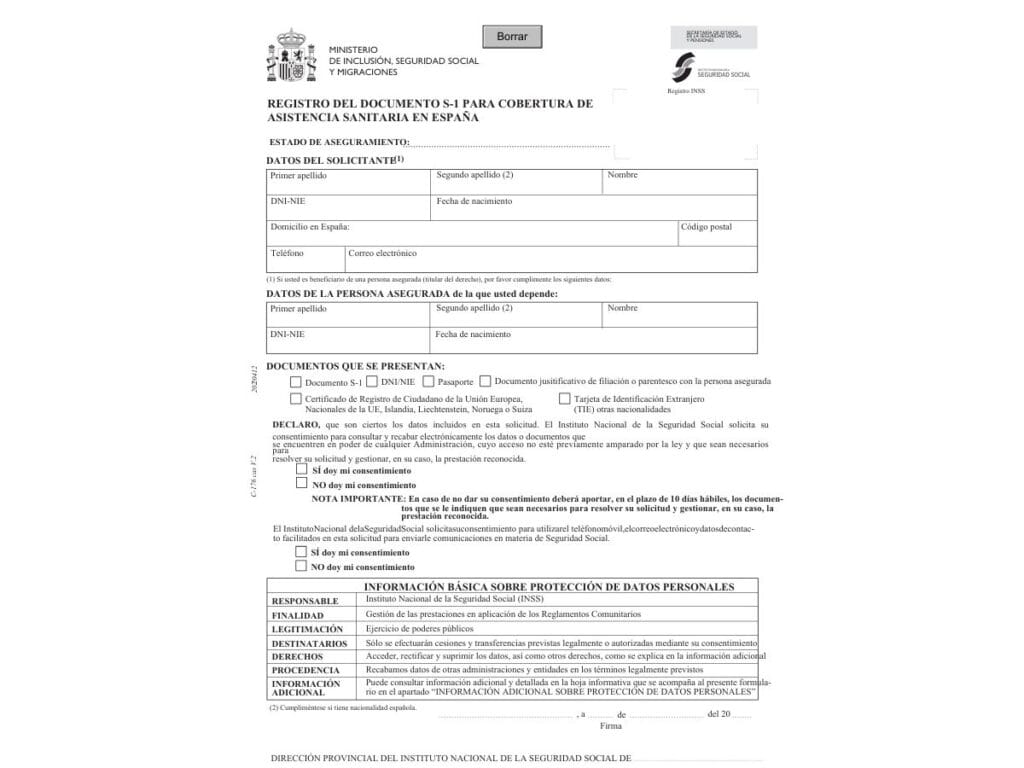
- The 90% Rule for UK Government Pensions: While your UK government pension is only taxable in the UK, Spanish authorities will still consider its value when calculating your eligibility for means-tested benefits or public healthcare, depending on your status .
- e.g., if you are not covered under the S1 form scheme
In conclusion, the UK-Spain tax treaty provides a clear, residence-based framework that largely shifts the tax burden on private pension income to Spain for retirees resident there. For the British retiree, success lies in understanding that their SIPP drawdown and State Pension become Spanish-taxed income, while their civil service pension remains UK-taxed.
Navigating this split effectively, while complying with Spanish wealth and asset reporting, is the key to a financially stable and compliant retirement in Spain.
3. Key Declarations and Requirements
| Obligation | Description | UK Specifics |
| Personal Income Tax (IRPF) | Annual tax return (Modelo 100) declaring worldwide income (including all pensions, savings interest, dividends, rental income). | All UK-sourced income must be declared. A tax credit is generally applied in the IRPF for any UK tax that was legitimately paid on income (e.g., UK rental income is taxable in both countries, with credit given in Spain). |
| Declaration of Overseas Assets (Modelo 720) | Annual declaration of overseas assets (bank accounts, investments, real estate, insurance, and pension funds like SIPPs/QROPS) if the value in a specific category exceeds €50,000. | Crucial for UK retirees: Pension funds, bank accounts, and any UK property must be reported if they breach the €50,000 threshold. Failure to file correctly results in severe, disproportionate penalties. |
| Wealth Tax | Annual tax on worldwide net assets (excluding primary home allowance) above a general exemption threshold of €700,000 (though this varies greatly by Autonomous Community, e.g., Madrid has a near-100% bonus). | Pension funds and life assurance policies that are not Spanish-compliant may be included as taxable assets. |
| Capital Gains Tax (CGT) | Applied to gains from the sale of assets, such as a second home or investments. | Selling a UK property: The gain is generally taxable in both countries, with Spain giving a credit for the UK CGT paid. If the property was your main home and you reinvest the proceeds into a Spanish main home, there may be an exemption in Spain. |
| Inheritance & Gift Tax (ISD) | Tax on assets received through inheritance or gifts. | The rules and rates vary significantly depending on the Autonomous Community and the relationship between the giver and the recipient. UK assets passed down will be subject to Spanish IHT if the recipient is resident in Spain, with UK IHT (if applicable) credited. |
4. Post-Brexit Considerations
Brexit did not change the core tax treaty but reinforced that UK citizens are now non-EU citizens. This primarily affects:
- Residency Visas: UK retirees must apply for a residency visa (most commonly the Non-Lucrative Visa ) and prove sufficient passive income/savings.
- QROPS Transfers: Transfers of a UK pension into a Qualifying Recognised Overseas Pension Scheme (QROPS) have become more complex and potentially subject to a 25% Overseas Transfer Charge (OTC) if the member does not live in the same country as the QROPS.
QROPS Transfers refer to the process of moving your pension savings from a UK-registered pension scheme to a recognised overseas pension scheme (ROPS).
🇬🇧 Key Components QROPS
- QROPS stands for Qualifying Recognised Overseas Pension Scheme. It’s an overseas pension scheme that has been approved by His Majesty’s Revenue and Customs (HMRC) to receive transfers from UK-registered pension schemes without incurring unauthorised payment tax charges.
- The main purpose of QROPS transfers is to allow UK residents who are moving or have moved abroad (expats) to consolidate their UK pension savings into a pension scheme in their new country of residence.
💰 Key Tax and Regulation Points
- Overseas Transfer Charge (OTC): A transfer to a QROPS may be subject to a 25% tax charge on the value transferred, known as the Overseas Transfer Charge.
- Exemptions usually apply if:
- Both the individual and the QROPS are in the same country after the transfer.
- The QROPS is an occupational pension scheme sponsored by the individual’s employer.
- Exemptions usually apply if:
- Overseas Transfer Allowance (OTA): This is the maximum value of pension savings you can transfer to a QROPS above which the 25% tax charge will apply, even if other exemptions are met.
- Reporting Requirements: The QROPS provider must report payments and subsequent transfers to HMRC for a period, often 10 years, following the transfer.
- Unauthorised Payments: If you transfer to a scheme that is not a QROPS, it is treated as an unauthorised payment and can incur a tax charge of 40% or more.
- UK Tax Rules: Payments out of funds transferred to a QROPS may be subject to UK tax rules for up to 10 tax years after the transfer date, regardless of where the individual is resident.
⚠️ Important Considerations
- Complexity: QROPS transfers are complex and have significant tax implications, especially if your country of residence or the QROPS’s country of establishment changes within the first five years.
- Professional Advice: It is highly recommended to seek advice from a qualified financial advisor who specializes in UK and international pension transfers before making a decision.
That’s a very important request! Getting the official list is crucial for anyone considering a QROPS transfer.
📝 HMRC’s Recognised Overseas Pension Schemes (ROPS) List
The official list is published and maintained by HM Revenue & Customs (HMRC) and is technically called the Recognised Overseas Pension Schemes (ROPS) notification list.
Here are the key facts about the list and how to use it:
- What it Is: The list contains the details of overseas pension schemes that have told HMRC they meet the conditions to be a Recognised Overseas Pension Scheme (ROPS) and have consented to have their details published.
- Accessing the List: The full and current list is published on the official GOV.UK website. Because the list is quite long and updated frequently, the search results provided snippets of the list and links to the official guidance.
- Updates: The list is updated twice-monthly, usually on the 1st and 15th day of the month.
⚠️ Important Disclaimer from HMRC
HMRC explicitly states that:
Inclusion on the list does not guarantee that a scheme is a genuine ROPS. HMRC cannot guarantee that any transfer to a scheme on the list will be free of UK tax.
It is your responsibility to check with the overseas scheme manager or your financial adviser that the scheme is a ROPS and that any transfer of your pension savings will be free of UK tax.
🔍 Next Steps
To view the most current and complete list, you should go directly to the official source on the GOV.UK website.
The official link to check the list of pension schemes that have notified HMRC (His Majesty’s Revenue and Customs) that they meet the conditions to be a Recognised Overseas Pension Scheme (ROPS) is on the UK government website.
You can find the list here:
Check the recognised overseas pension schemes notification list (GOV.UK)
Spain
We cannot guarantee these are ROPS or that any transfers to them will be free of UK tax. It’s your responsibility to find out if you have to pay tax on any transfer of pension savings. Find out more about Overseas pension schemes.
| ROPS | Spain |
|---|---|
| Itzarri EPSV de Empleo | Itzarri is the Voluntary Social Welfare Entity (EPSV) that manages the pension plan for workers of the General and Institutional Administration of Euskadi, Basque Country. |
ROPS, formerly QROPS, is a ‘recognised overseas pension scheme’ for expats to take their pensions abroad, meeting UK HMRC requirements.