Welfare State Four Pillars
The Spanish Welfare State, largely consolidated since the 1978 Constitution, follows a model often classified as “Mediterranean.” Its primary aim is to ensure social protection, promote equality, and guarantee basic rights through public provision. These guarantees are fundamentally built upon the four major pillars: Education, Healthcare, Pensions, and Social Assistance (or Social Services).
I. 🎓 Education (Educación)
The Principle of Universality and Public Provision
- Constitutional Right: Education is recognized as a fundamental right in the Spanish Constitution, ensuring access for all citizens.
- Structure: The system is managed primarily by the Autonomous Communities (Comunidades Autónomas), leading to slight regional variations in curriculum and management, though guided by national laws (like the current LOMLOE).
- Compulsory and Free: Education is compulsory and free of charge for all children from the age of 6 to 16 (Educación Primaria and Educación Secundaria Obligatoria – ESO).
- Public Network: The vast majority of students attend public centers. There is also a significant network of subsidized private schools (centros concertados) which are partly funded by the state and must adhere to public quality standards.
- Higher Education: Public university fees are subsidized, making them significantly more accessible than in many other countries, although they are not entirely free.
- Challenges: Key challenges include reducing early school dropout rates, enhancing investment to meet the OECD average as a percentage of GDP, managing the decentralization of powers, and ensuring equitable access to resources between different socioeconomic backgrounds.
II. ⚕️ Healthcare (Sanidad)
The National Health System (Sistema Nacional de Salud – SNS)
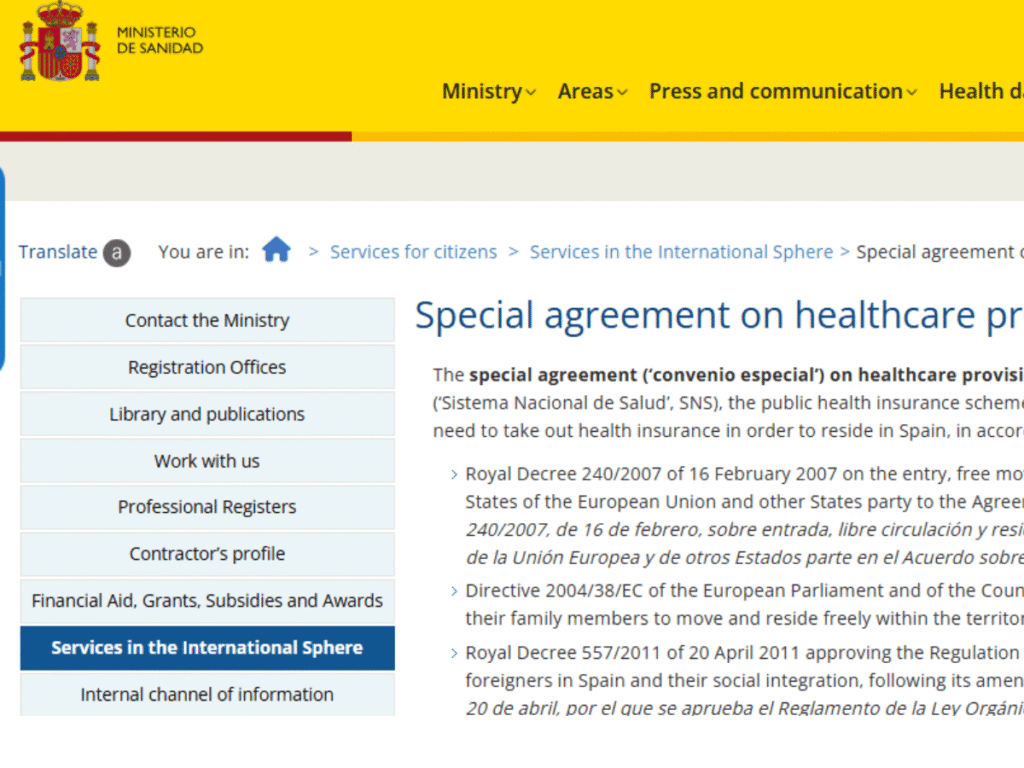
- Universal Coverage: Spain boasts a world-renowned National Health System (SNS) that provides universal coverage. It guarantees nearly full access to healthcare services to all Spanish nationals and legal residents, regardless of their employment or Social Security contribution status.
- Funding: It is financed primarily through general taxes, emphasizing solidarity and equity rather than being solely dependent on individual contributions.
- Decentralization: The SNS is heavily decentralized, with the management and provision of services fully devolved to the 17 Autonomous Communities. This decentralization ensures services are tailored to local needs but sometimes complicates coordination between regions.
- Key Services: Services include primary care (the fundamental access point), specialized hospital care, emergency services, and pharmaceutical benefits (with co-payment based on income and age).
- Challenges: Managing increasing demand due to an aging population, reducing waiting lists for specialist appointments and surgeries, coordinating high-quality care across all Autonomous Communities, and ensuring the financial sustainability of the system.
III. 💰 Pensions (Pensiones)
The Contributory Core of Social Security
- Contributory Model: The pension system in Spain is primarily a pay-as-you-go, contributory public system managed by the Social Security (Seguridad Social). Workers and employers make contributions that fund the current pensions.
- Retirement Pension (Jubilación): The main benefit is the public retirement pension. Eligibility and the final amount are determined by the number of years contributed (the contribution period) and the contribution base (the salary on which contributions were made).
- Other Benefits: The pillar also covers other critical benefits derived from Social Security contributions, such as Disability (Incapacidad Permanente), Widowhood/Orphans (Viudedad/Orfandad), and unemployment benefits.
- Non-Contributory Pensions: A safety net exists for individuals who have not contributed long enough but meet minimum residency and income requirements, ensuring basic financial protection (Pensiones No Contributivas).
- Challenges: The greatest long-term challenge is financial sustainability due to rapid demographic aging, a high life expectancy, and declining birth rates. This leads to a shrinking ratio of active workers to retirees, placing immense pressure on the system’s financial viability. Recent reforms have focused on aligning the retirement age and revaluation mechanisms with the cost of living and the demographic reality.
IV. 🫂 Social Assistance / Social Services (Servicios Sociales)The Fourth Pillar and Safety Net
- The “Fourth Pillar”: While Education, Healthcare, and Pensions have been historically centralized and prominent, Social Services, especially those dealing with care and dependency, have been recognized as the Fourth Pillar in recent decades.
- Purpose: This pillar is designed to provide services, support, and financial benefits to citizens in situations of need, exclusion, or vulnerability that are not covered by the other three systems.
- Key Areas:
- Dependency Care: The System for Autonomy and Attention to Dependency (SAAD) provides care services and financial benefits for the elderly, disabled, and chronically ill who need substantial assistance.
- Minimum Income: The Minimum Living Income (Ingreso Mínimo Vital – IMV) is a recent, national-level social benefit designed to prevent poverty and social exclusion by guaranteeing a minimum income level for vulnerable households.
- Local Services: Services offered by municipalities and Autonomous Communities, including programs for childhood protection, social integration, support for women victims of violence, and housing assistance.
- Challenges: The major challenge here is the fragmented nature of the services, which are often administered at the regional or municipal level, leading to disparities. A core objective is improving the quality, coverage, and coordination of the dependency system and ensuring the IMV effectively reaches all those in need.
Sometime in your life you may be in need of the support provided by social security benefits. The Social Welfare system in Spain provides benefits relaying on different administrations.
The first step is to register at the City Hall census (padrón). Asocial worker (trabajador social) will inform you of the services provided by the social welfare (servicios sociales / bienestar social).